Brand activation objects: designing for a bar, not a shelf
An ice bucket in a venue is handled a hundred times a night by people who do not own it. That changes everything about how it is designed and made.
A consumer product is bought once and used by its owner. A brand activation object is placed in a bar or on a terrace and used by staff and guests who did not choose it and will not look after it. That single difference drives most of the design decisions in our work for drinks brands.
It has to survive
Bar objects get dropped, stacked, left in dishwashers and filled with ice for twelve hours. Materials that look right in a rendering fail in a month. For the Aperol ice bucket we used a double wall: it keeps the ice longer, and it keeps condensation off the table, which is what venue owners actually complain about.
Finishes matter more than form. A gradient that scratches at the rim after a week is worse than no gradient at all. We test finishes with the abuse they will get, not the abuse the brief describes.
It has to be recognised from across the room
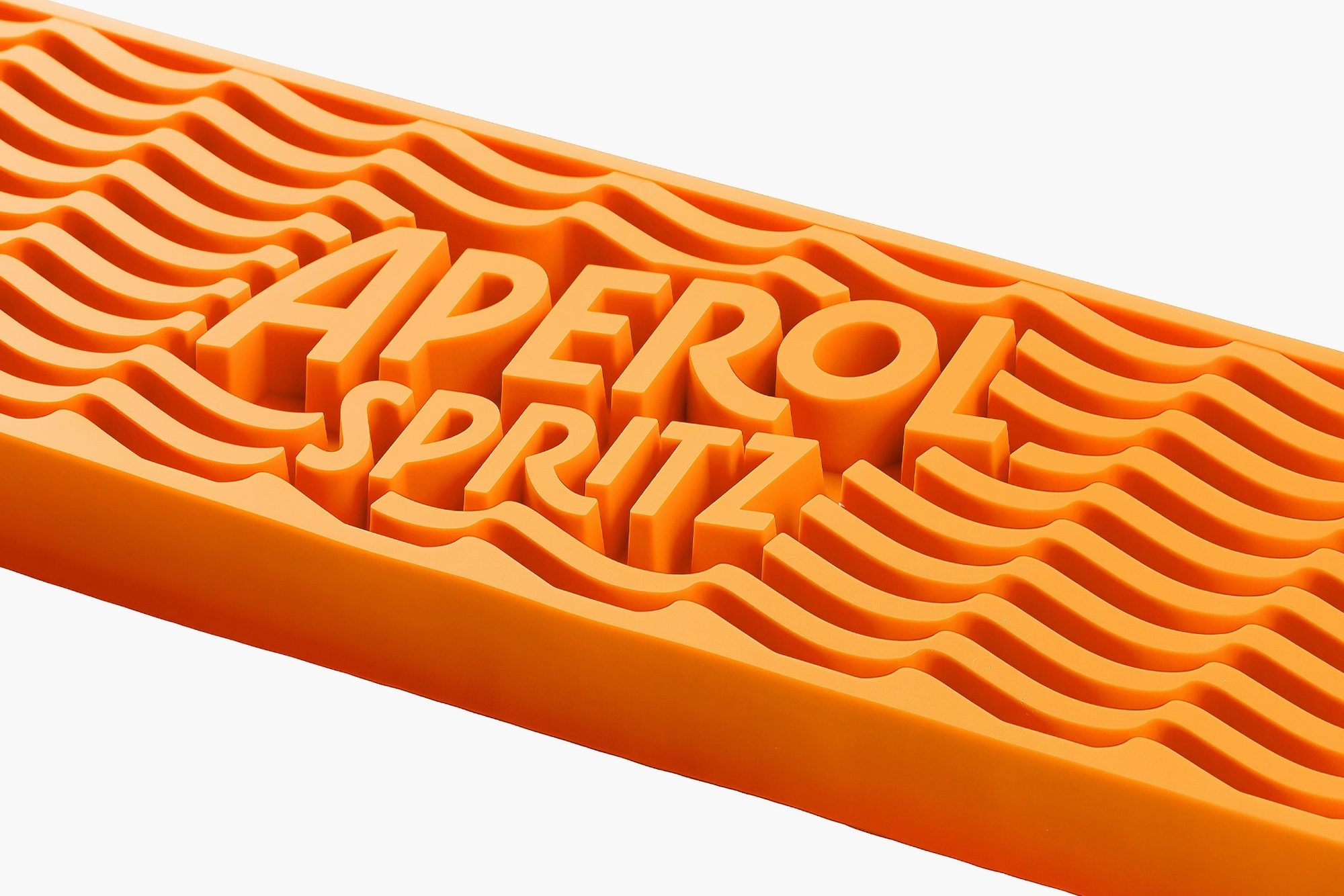
A brand object is a small sign. The Aperol collection shares one silhouette, the wave, and one orange gradient across an ice bucket, a bottle glorifier, a bar mat, a low table and a candle holder. Each piece is recognisable on its own, and together they turn a venue into a destination without a single logo doing the work.
This is where industrial design earns its place in a marketing budget. A shape can be owned. A printed logo can only be rented.
It has to be made in the thousands, on a deadline
Activation products ship in quantities that are large for a design studio and small for a factory, often with a date fixed by a campaign. That combination punishes any process with long tooling or long lead times.
We design for processes that scale down gracefully. Rotational moulding, vacuum forming, cast polyurethane and simple injection tools all work at a few thousand units. We also design the family so that parts are shared across objects: one base, several tops.
It has to feel premium, or it should not exist
Activation objects are placed, not sold, so the unit cost has to make sense against the number of venues rather than a retail price. That is not an argument for making them cheap. A bar object that feels promotional does the brand harm every night it sits there. We take on this work when the brand wants an object with the finish of a product, in the thousands rather than the hundreds of thousands. Low-cost promotional items are a different business, and not ours.
What we have learned
Three things, after several collections for Campari and others:
- Design the hero object first and the family around it. The ice bucket set the wave; the rest followed.
- Prototype at full scale in the final material early. Bar objects are judged by hand, not by eye.
- Visit the factory before the order. Our Shanghai team checks the line that will make the parts, because a campaign date does not move.
Brand activation is a sector we enjoy because it is honest. The object either works on the bar or it does not, and the bar staff will tell you which.