
A sensor that disappears: designing hardware for museums
Charp's climate monitors sit next to irreplaceable artworks. The design brief was to be precise, reliable and almost invisible. Notes on designing for a space that is not yours.
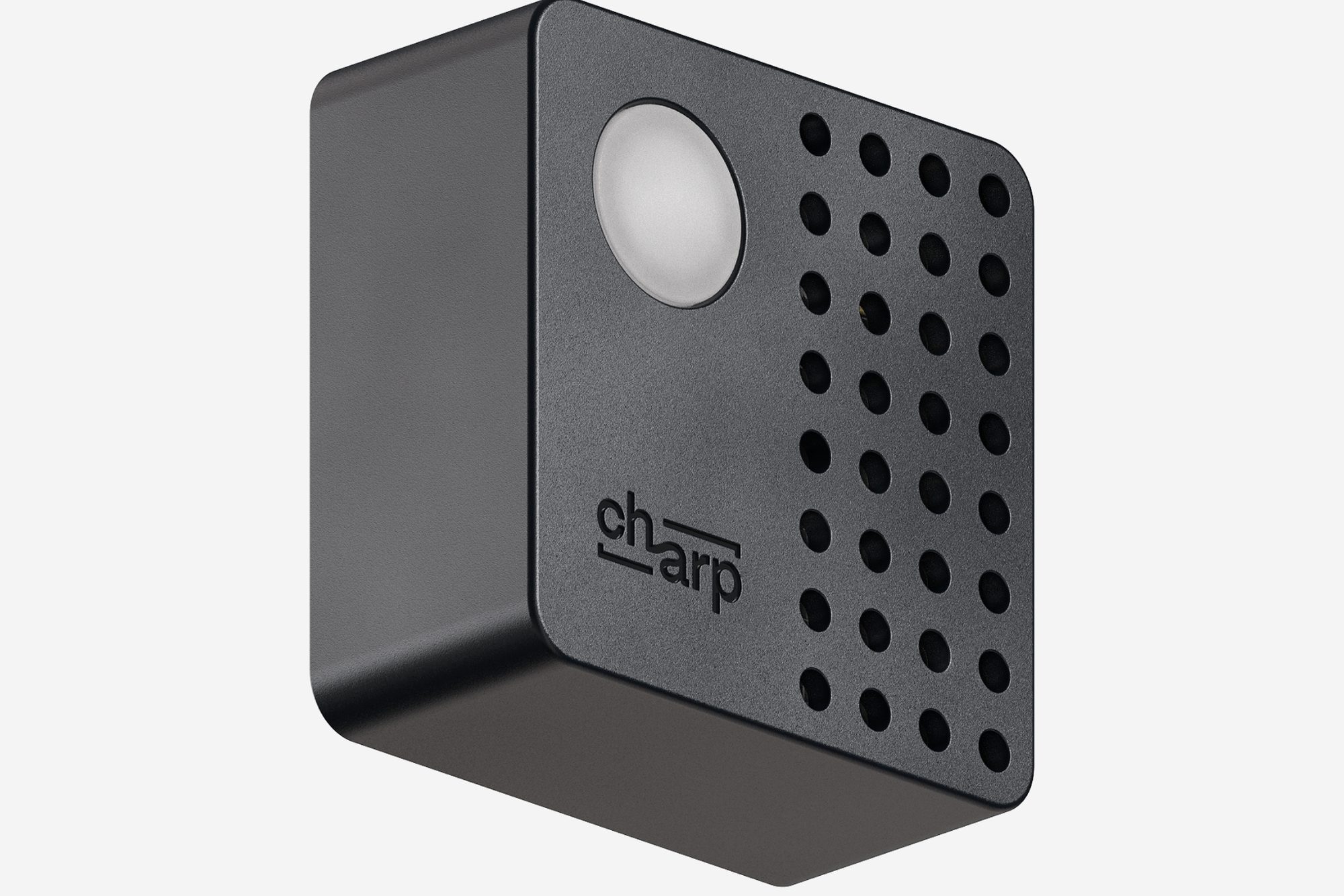
Museums, galleries and archives monitor temperature, humidity and light because small deviations, over years, damage what they hold. Charp builds a system that does this in real time, with sensors in the exhibition space and software for the conservation team. We designed the hardware.
The unusual part of the brief was where the product lives. It sits near objects that are far more valuable than itself, in rooms designed by someone else, in front of visitors who should not notice it.
Design for someone else's room
Most products are designed to be seen. These were designed to be overlooked. That meant a minimal form, a neutral finish that reads as part of the architecture, and proportions that sit comfortably near the objects they protect.
It also meant restraint with indicators. A blinking light next to a painting is a distraction and, to a conservator, an alarm. The system's intelligence lives in the software, which alerts staff to deviations. The device itself can stay quiet.
Precision is a mechanical problem too
A climate sensor is only as good as the air that reaches it. An enclosure has to let air move past the sensing element without creating a pocket of still air, while keeping openings discreet. Light sensing needs an aperture that sees the room the way the artwork does. These are small geometric decisions with a direct effect on measurement, and they have to be made together with the electronics, not after them.
Reliability over years, not months
Conservation data is valuable because it is continuous. A sensor that needs attention every few months breaks the record. Power, range through thick walls and the ease of routine maintenance by museum staff are design requirements in this sector, not afterthoughts.
Install without a drill
Heritage buildings do not welcome holes. Mounting in this sector has to work on a range of surfaces, be reversible and leave no trace. This is the kind of requirement that is easy to miss in a brief written in an office and impossible to ignore once you have stood in a seventeenth-century room with a facilities manager.
What this sector teaches
Designing for cultural institutions is a lesson in humility. The product is not the point; the collection is. A sensor that does its job for a decade without anyone thinking about it is a success, and it is a harder design problem than something that asks for attention.
The same thinking applies to much of the hardware we design for industrial and infrastructure use: the best outcome is often that the product is trusted and then forgotten.