Why the housing is part of the sensor: the Xenolidar G6
A lidar housing has to cool, seal, mount and look like an instrument. On the G6 those four jobs were designed as one part, not four.
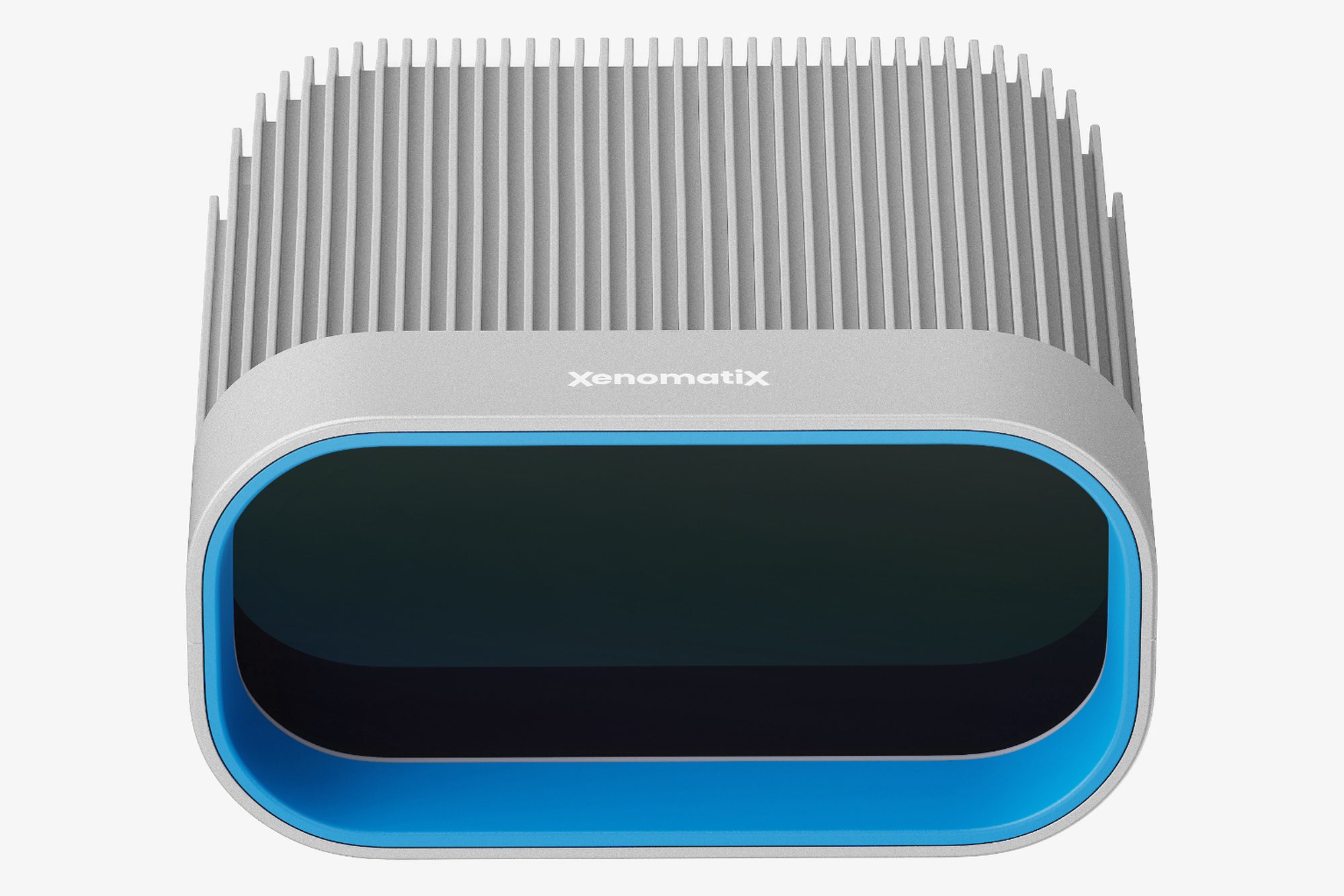
XenomatiX builds solid-state lidar with no moving parts. The sensor inside is the product. Our job on the G6 was the housing, and a housing for a sensor like this is not a box. It is the thermal path, the weather seal, the mounting interface and the thing a customer sees on their vehicle, all at once.
Working in parallel, not in sequence
The most important decision was made before any drawing: XenomatiX developed the optics, electronics and software while we developed the housing, at the same time. Thermal, sealing and assembly decisions were made with the electronics layout, not after it. When a housing is designed after the electronics are frozen, it ends up with brackets, spacers and a heatsink glued on. When it is designed alongside, it can be one part.
One casting, four jobs
The housing is cast aluminium in two halves. Each half is the structure, the heat path and the sealing surface in one part. That is the advantage of casting over an assembly of machined plates and brackets: the geometry can be complex where it needs to be, and there are two parts to inspect instead of twelve.
Cooling. The laser and processing electronics produce heat that has to leave through the housing. A finely ribbed heatsink is cast into the top. The ribs do the thermal work and, because they are the most visible feature, they also give the sensor its character. The remaining surfaces are kept smooth so the product reads as calm rather than technical.
Sealing. The optical apertures are recessed, with a framed window and a gasket. The recess protects the optics from impact and spray. The frame keeps the front face uncluttered.
Mounting. The sensor sits on vehicles and machines, so the mounting interface had to survive vibration and still be quick to align. It is part of the casting, not a bracket.
Field use. The connector panel is clearly iconified, so power and data ports can be identified in the field without a manual. A blue accent marks the functional elements, carried through from the early 3D-printed models to the production sample.
What casting demands
A cast part has rules: draft on every wall, consistent wall thickness, radii where ribs meet surfaces, and a parting line that someone has to decide on early. We worked with the foundry from the first model, so the ribs could be cast at the fin spacing the thermal calculation needed, and the sealing surfaces could be machined after casting in a single setup.
Tolerances were tight only where they had to be: the sealing surfaces and the optical frame. Everything else carries the general tolerance of the process, which is what keeps a casting affordable at the volumes an industrial sensor sells in.
The lesson
For instrument-grade hardware, the housing is not packaging. It is the part of the product that decides whether the electronics stay cool, dry and aligned for years. Design it with the electronics, choose a process that lets one part do several jobs, and let the functional features carry the aesthetics.