
Die casting, sheet metal or moulded plastic: choosing the enclosure process
The enclosure process is usually decided by volume, heat and feel. A short guide to the trade-offs we walk through on every electronics product.
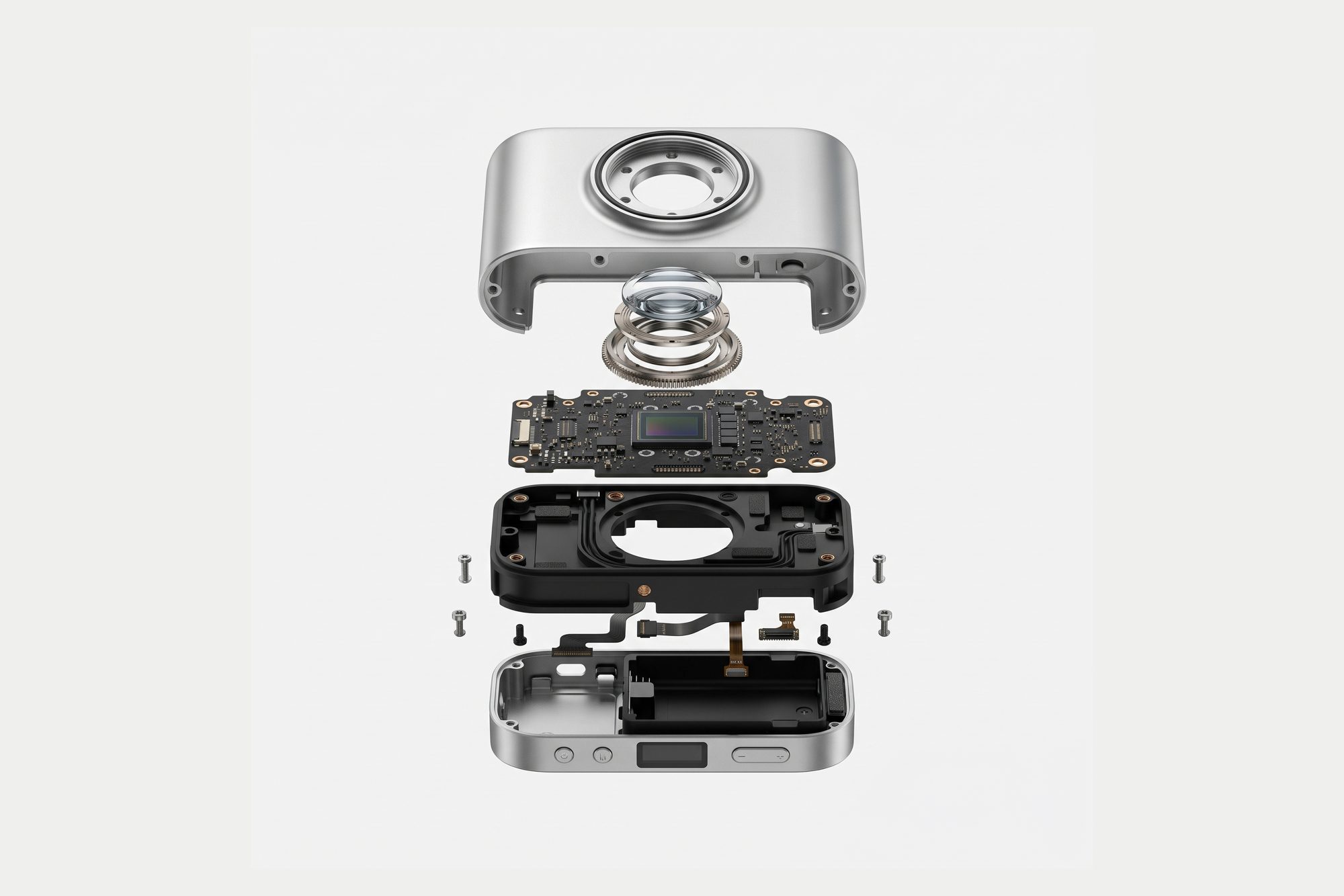
Every electronics product needs a box, and the choice of how that box is made decides more of the product's cost and character than any styling decision. We walk clients through the same four questions each time.
1. How many will you make?
This is the first filter because it decides what tooling you can afford.
- Under a few hundred units: machined aluminium, bent sheet metal, or 3D-printed and cast parts. No tooling, high unit cost, short lead time.
- Hundreds to a few thousand: sheet metal, extrusion with machined end caps, vacuum forming, low-volume aluminium tooling for injection moulding.
- Tens of thousands and up: injection-moulded plastic in steel tools, or die-cast aluminium. High tooling, low unit cost.
A product that will sell five hundred units a year should not be designed around a steel injection tool, however good the renders look.
2. How much heat?
Plastic insulates. Metal conducts. If the electronics produce heat that has to leave the box, the enclosure is part of the cooling system and the material choice follows from the thermal calculation.
Die-cast aluminium lets you cast the heatsink into the housing, as we did on the Xenolidar G6. Sheet metal gives you a conductive skin and the option of a separate heatsink. Plastic can work with an internal metal plate or vents, but vents cost you sealing.
3. Does it have to be sealed?
Outdoor, bathroom, kitchen, industrial: sealing to an IP rating shapes the parting lines, the gaskets, the fasteners and the connectors. Moulded plastic and die casting both seal well with a designed gasket groove. Sheet metal is harder to seal and usually relies on a folded lip plus a formed gasket, which adds parts.
4. How should it feel?
A conference camera, a home battery and a museum sensor are all electronics in a box, and they should feel nothing alike.
- Die-cast aluminium feels dense and permanent. It suits instruments and products that are mounted and left alone.
- Extruded aluminium gives a precise, linear look at low tooling cost, with the constraint that the section is constant along its length.
- Sheet metal feels industrial and honest. It is the fastest route to a metal product at low volume.
- Injection-moulded plastic gives the most freedom in form and the lowest unit cost at volume. It can feel cheap or premium depending on wall design, texture and the quality of the tool.
The combinations
Most products we ship are a combination: a plastic front with a metal chassis, an extrusion with moulded end caps, a cast body with a sheet-metal cover. The skill is in putting each process where its strength is and keeping the number of parts low.
What to do before deciding
Write down the year-one and year-three volumes, the heat the electronics produce, the sealing requirement and the feel the brand needs. Then ask a factory for budget prices on two options. We do this in the discovery sprint, before any styling, because the answer changes what we draw.